
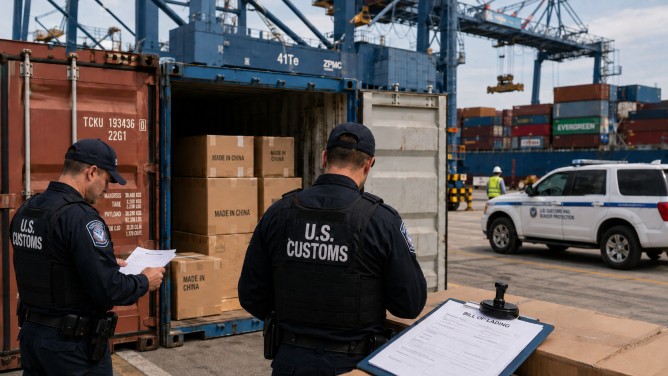
The United States has raised concerns over a “shadow transshipment network,” involving 38 countries and the European Union, which it claims facilitates the entry of Chinese goods into the US market despite high tariffs. This network allegedly enables these goods to pass through intermediary nations, circumventing the intended tariffs. A report titled “The Great Transshipment Scam” suggests that this potentially illegal practice could be valued at approximately $60 billion. The report points to significant losses in US tariff revenue as a consequence of these activities.
Among the nations and regions identified in the report are India, Canada, the European Union, Israel, Japan, Mexico, South Korea, Taiwan, Brazil, Indonesia, Malaysia, Thailand, Turkey, Vietnam, Argentina, Azerbaijan, Bangladesh, Cambodia, Chile, Colombia, Costa Rica, the Dominican Republic, Georgia, Jordan, Kazakhstan, Kenya, Laos, Morocco, Myanmar, Oman, Panama, Peru, the Philippines, Singapore, Sri Lanka, Switzerland, the UAE, and Uzbekistan. The document claims that in 2025, around $67 billion in US-bound goods were allegedly rerouted from China via major transshipment hubs such as Mexico, India, and Vietnam, leading to an estimated $28 billion loss in US tariff revenue.
The report shines a spotlight on the Pune-Gujarat-Chennai corridor in India, noting that Chinese shipments of products like electric pumps and compressors have bolstered local businesses while simultaneously creating increased competitive pressures on US manufacturers. This corridor is highlighted as a significant route for these transshipped goods, contributing to the challenges faced by American companies.
In response to these findings, the United States is considering a series of measures to combat this practice. Proposed actions include intensifying inspections and interdiction, imposing additional tariffs, enacting sanctions, and potentially restricting market access for countries found to be aiding tariff evasion. These steps are aimed at curbing the impact of transshipment and protecting US economic interests.