
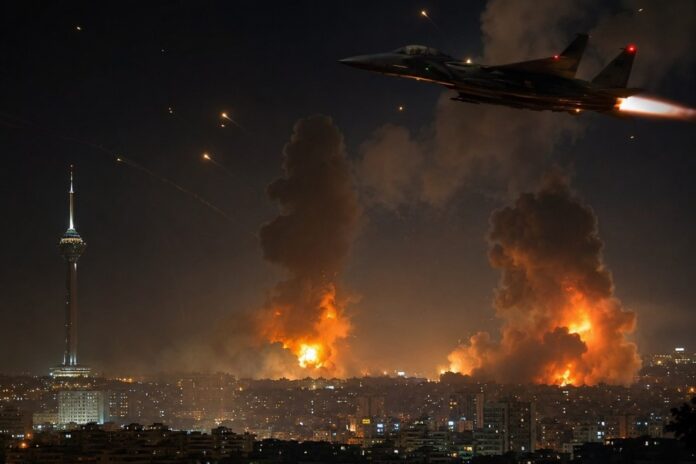
The United States has initiated a series of military operations against Iran, carrying out airstrikes for three consecutive nights. President Donald Trump has announced plans to enforce a maritime blockade on Iran, accompanied by a 20% tariff on all shipments passing through the Strait of Hormuz under U.S. security oversight. According to the U.S. Central Command, these military actions aim to weaken Iran’s military capabilities and prevent potential threats to commercial vessels and civilians in this vital maritime corridor. Trump has asserted that these military efforts will continue as the U.S. strives to maintain security in the Strait.
This assertive approach follows reports of incidents involving two oil tankers from the United Arab Emirates, which were allegedly attacked by Iranian cruise missiles while navigating Omani waters. The assault resulted in the death of an Indian crew member and left several others injured. These developments have led to a marked increase in Brent crude oil prices, which have risen by nearly 8%, highlighting the growing concerns over global energy supply stability.
Iran has strongly condemned the proposed maritime blockade, accusing the U.S. of endangering international energy security and warning that any attempts to restrict its maritime access would be met with a strong response. Furthermore, international maritime authorities have highlighted that imposing mandatory transit fees in international waters is not legally supported under current international law.
The escalation of military tensions has sparked fears of a wider regional conflict. Ongoing attacks have disrupted shipping routes, driven up oil prices, and contributed to uncertainty in the global economy. The strategic Strait of Hormuz remains a critical hub for international trade, making the stakes particularly high as tensions continue to mount.