
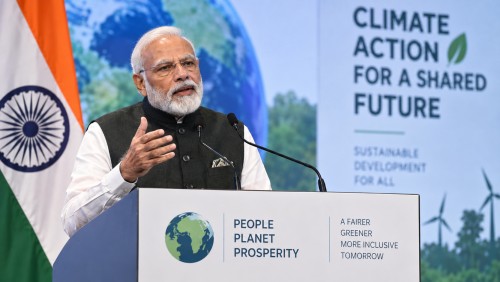
As global attention increasingly turns to environmental accountability, a notable conference in New Delhi is addressing the pressing challenges of climate dynamics. Hosted by the National Green Tribunal from September 19 to 20, the International Conference on “The Future of Environment and Climate Dynamics” has gathered judges, government officials, environmental experts, and legal representatives from various countries. The conference aims to tackle key environmental issues such as policy implementation gaps, environmental justice, and inter-institutional cooperation.
Amid these discussions, Indian Prime Minister Narendra Modi emphasized the often-overlooked contributions of developing nations in the global climate narrative. Speaking at the event, Modi highlighted that while developing countries are frequently blamed for global carbon emissions, India’s per capita emissions are actually less than half the global average. This assertion underscores India’s commitment to sustainable practices and its proactive role in international climate efforts.
Modi further elaborated on India’s achievements in aligning with global environmental standards. He noted that India has not only met but exceeded its climate commitments under the Paris Agreement ahead of schedule. This progress is largely attributed to significant advancements in renewable energy, including a substantial increase in non-fossil fuel capacity and solar energy initiatives.
The two-day conference is structured around four technical sessions, each designed to foster dialogue and develop strategic approaches to future climate challenges. By bringing together a diverse group of stakeholders, the conference seeks to catalyze meaningful action and collaboration in addressing the environmental issues that transcend national borders.