
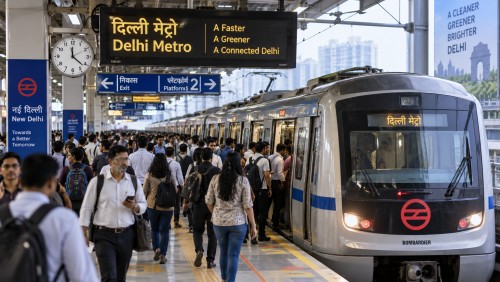
As a strike by private agency drivers with the Delhi Transport Corporation (DTC) stretched into its fourth day, the city’s public transport infrastructure faced a significant challenge. With thousands of buses off the streets, commuters turned in droves to alternative modes of transport, creating an unprecedented demand on the Delhi Metro network.
Against this backdrop, the Delhi Metro Rail Corporation (DMRC) announced that it had reached an all-time high in single-day passenger numbers on September 17. A staggering 82,44,903 boardings were recorded across its sprawling network, illustrating the Metro’s critical role in maintaining urban mobility amidst disruptions to other services.
To accommodate the surge in passengers, the DMRC implemented a series of measures to enhance its service capacity. This included the operation of 20 additional train trips and the deployment of eight extra trains to meet the heightened demand, particularly during peak commuting hours. These efforts were part of a broader strategy to ensure smooth transit for Delhi residents relying on the Metro.
In conjunction with service enhancements, the DMRC and the Central Industrial Security Force (CISF) undertook increased efforts to manage the flow of passengers and maintain security within the stations. The coordinated response helped mitigate the challenges posed by the bus strike, reinforcing the Metro’s position as an indispensable component of Delhi’s public transport network.
The record footfall not only underscores the reliance on the Metro during transport disruptions but also highlights the system’s capacity to adapt swiftly to sudden increases in commuter volume. As the strike continues, the Delhi Metro remains a pivotal lifeline for millions navigating the city’s urban landscape.