
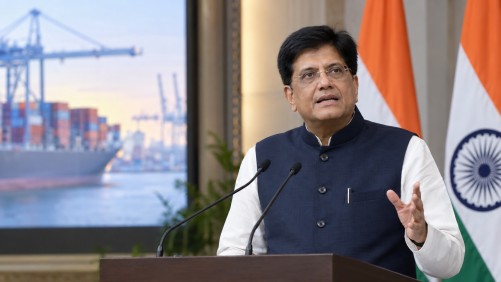
As India seeks to expand its global economic footprint, the country is actively pursuing trade agreements with multiple nations. Among these efforts, the newly signed Free Trade Agreement (FTA) with New Zealand stands out, set to take effect on October 20. This agreement, announced by India’s Commerce and Industry Minister Piyush Goyal, marks a significant step in enhancing trade relations between the two countries.
The agreement promises to provide duty-free access for 100% of Indian exports to New Zealand from the outset. This development is expected to bolster trade volumes and economic ties. Additionally, the pact includes a provision for facilitating $20 billion in investments from New Zealand into India over a span of 15 years, signifying mutual commitment to a long-term partnership.
Despite the comprehensive nature of the agreement, India has strategically excluded several sensitive agricultural products, such as onions, chickpeas, peas, corn, almonds, and sugar, to safeguard domestic interests. This selective approach highlights India’s focus on protecting its local agricultural sector while engaging in international trade.
Beyond New Zealand, India is accelerating negotiations with other global partners, including the European Union, Canada, and Chile. The negotiations with Canada are particularly noteworthy as they are set to enter their fifth round in October. Both countries are working diligently towards a Comprehensive Economic Partnership Agreement, aiming for substantial progress in the near term.
Talks with Chile are also advancing steadily, while there is optimism surrounding the potential progress of the trade agreement with the European Union before the year concludes. These efforts underscore India’s strategic intent to broaden its economic engagements and solidify its position in the global market.