
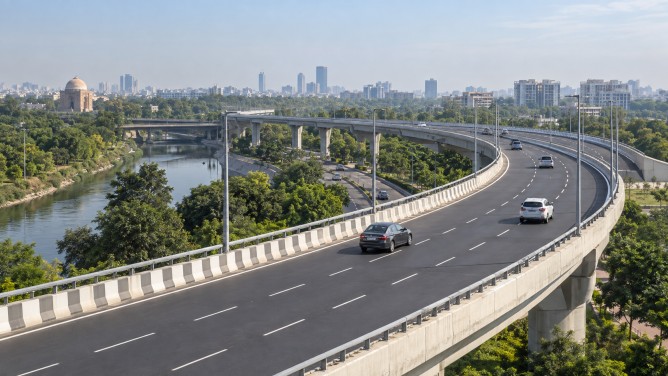
Delhi’s infrastructure landscape is on the brink of a significant transformation as the city prepares to unveil the long-awaited Barapullah Phase III elevated corridor. This new infrastructure is set to greatly improve connectivity between the bustling areas of Mayur Vihar in East Delhi and South Delhi, including Noida. Scheduled to open to the public on September 29, the corridor promises to alleviate traffic congestion and reduce travel times in one of the city’s busiest thoroughfares.
The 3.5-kilometer elevated corridor will extend from Mayur Vihar Phase I to Sarai Kale Khan, linking directly with the existing Barapullah corridor. This extension will create a nearly signal-free route, aimed at easing the commute toward South Delhi’s key areas, such as AIIMS. For many travelers, this development means that journeys currently taking 35 to 40 minutes could be cut down to about 15 minutes, depending on traffic conditions and the point of departure.
Equipped with a bridge over the Yamuna River, the four-lane corridor is designed not only for vehicles but also features nine traffic-distribution loops and connecting ramps. It caters to cyclists with a dedicated track and includes pedestrian-friendly facilities, reflecting a holistic approach to urban transportation.
Despite its promising impact, the project has faced multiple delays since its approval in 2014 and the commencement of construction in 2015. Challenges such as land acquisition issues, bureaucratic clearances, construction hurdles, and the unforeseen disruption of the COVID-19 pandemic contributed to these setbacks. As a result, the project’s estimated cost has escalated from its initial ₹1,260 crore to approximately ₹1,635 crore.
As the opening date approaches, final preparations are in progress, with major structures like the Yamuna bridge and connecting ramps already completed. This development marks a pivotal moment in Delhi’s ongoing efforts to modernize its transport infrastructure, aiming to provide residents with more efficient travel options and improve the overall flow of the city’s traffic.