
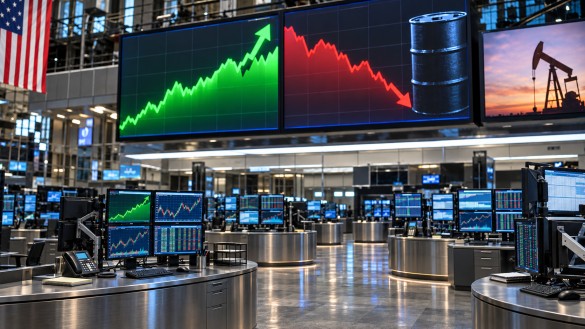
US financial markets experienced a significant rally following a strong performance by Democrats in the midterm elections, which fueled investor anticipation of a potential de-escalation in tensions with Iran. The outcome of the elections is seen as a factor that could push President Donald Trump to reconsider his stance on the Iran conflict, thereby edging closer to a resolution.
The political developments had an immediate impact on global energy prices, with Brent crude oil falling nearly 9% to dip below $100 per barrel for the first time in about two months. This price drop, which marks a roughly 20% decrease over the week, suggests expectations of reduced geopolitical tensions and a potential recovery in global energy supplies. Such a decline in energy costs is contributing to easing concerns about inflation, thereby boosting investor confidence.
On Wall Street, the reaction was positive, with the S&P 500 gaining 1.6% on Wednesday. Other major US stock indexes also recorded gains. The market optimism is partly attributed to expectations that Democrats will exert greater influence over economic and foreign policy decisions, which could include stronger support for clean energy initiatives. Consequently, renewable energy stocks saw a boost, reflecting investor confidence in increased backing for sustainable energy policies.
In addition to the stock market rally, US government bonds attracted increased investor interest, leading to a fall in Treasury yields. The yield on the benchmark 10-year US Treasury note declined to 4.87%, driven by diminishing inflation concerns and shifting economic outlook expectations.
The recent developments highlight how interconnected political events and economic indicators are influencing financial markets and investor sentiment. With the Iran conflict identified as a significant factor in the Republican losses during the midterms, both President Trump and Vice President JD Vance have acknowledged its impact, particularly concerning the rising fuel prices.
As markets continue to react to political and geopolitical developments, investors remain attentive to any shifts in Washington’s approach towards Iran, which could further influence energy prices and the broader economic landscape.