
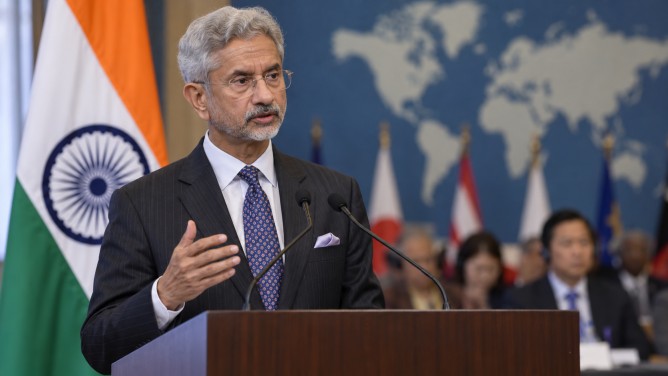
In the face of a shifting global landscape, India’s External Affairs Minister S Jaishankar has positioned the country as a “power in the middle” with a robust $4 trillion economy and a population of 1.4 billion. Speaking at the Bloomberg New Economy Forum alongside Canadian Foreign Affairs Minister Anita Anand, Jaishankar highlighted the strategic cooperation among countries with shared interests to navigate geopolitical uncertainties and economic transformations.
Jaishankar emphasized the increasing role of middle powers in shaping international decision-making processes. He noted that nations are pursuing independent policies and forming partnerships to tackle common challenges, citing initiatives like the Quad and the India-Middle East-Europe Economic Corridor (IMEC) as examples of collaborative efforts on strategic and economic fronts.
The discussion underscored a global shift where more countries seek to influence international governance. Jaishankar’s remarks mirrored a growing trend among emerging economies to enhance cooperation while preserving strategic autonomy. This viewpoint aligns with Canadian Prime Minister Mark Carney’s call for middle powers to unite in safeguarding multilateralism amidst changes in the international system.
Anand echoed the sentiment, urging middle powers to adopt leadership roles in shaping the global order. She advocated for collaborative efforts to uphold international norms, bolster economic resilience, and address emerging security threats. Highlighting Canada’s approach, Anand referenced trade agreements, security alliances, and engagement in multilateral platforms like the G7 as means to fortify national strategic autonomy while supporting shared goals and resilient supply chains.
The dialogue highlighted the critical role of middle powers in adapting to geopolitical tensions, economic uncertainties, and evolving global alliances. As countries navigate these challenges, strategic cooperation among middle powers emerges as a pivotal factor in influencing the future direction of international relations.