
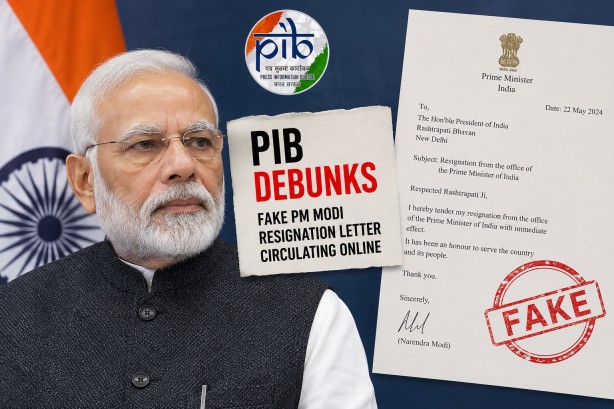
In a recent development, a social media post claiming that Indian Prime Minister Narendra Modi has stepped down from his position has been debunked as false. The post, which went viral, included a letter that appeared to be official, complete with the national emblem and a purported signature from the Prime Minister. However, the government’s Fact Check unit has confirmed that the letter is a forgery.
Authorities have addressed the situation, stating that Prime Minister Modi has neither issued nor signed any resignation letter. They emphasized the importance of the public verifying information through official channels before sharing it on social media platforms. This incident underscores the broader issue of misinformation that continues to circulate online.
This clarification comes amidst a series of misleading narratives that have recently made waves on the internet. Among them are AI-generated videos falsely suggesting that the Prime Minister had spoken about student protests. Such incidents have raised concerns about the impact and reach of manipulated content on social media.
Government officials have reiterated their advice to the public to exercise caution when encountering potentially misleading information online. They stress the role of individuals in helping to curb the spread of false narratives by relying on credible sources for verification.
The proliferation of fake news and manipulated content remains a significant challenge, with authorities actively working to address these issues. This latest instance serves as a reminder of the critical need for vigilance and discernment in the digital age.