
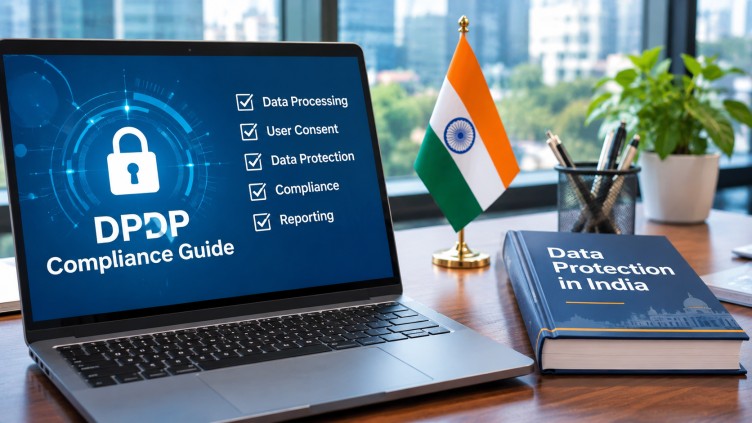
Singahi has unveiled a new compliance guide aimed at assisting companies in the software, cloud, IT, and outsourcing sectors to align with the data protection standards set by India’s Digital Personal Data Protection (DPDP) Act, 2023. The guide, titled “Processing personal data for Indian clients: the DPDP questions you will be asked,” addresses key questions that suppliers dealing with personal data on behalf of Indian businesses may face during contract renewals and compliance checks. As the majority of the Act’s provisions are set to become effective on May 13, 2027, companies are urged to begin preparations to meet these upcoming obligations.
The DPDP Act outlines various compliance requirements, notified by the Ministry of Electronics and Information Technology with the DPDP Rules, 2025, on November 13, 2025. Some provisions, such as those establishing the Data Protection Board, took immediate effect, while others related to consent managers, security, breach reporting, data erasure, and penalties will roll out over the coming years. Under the Act, Data Fiduciaries hold responsibility for their Data Processors’ actions, regardless of existing contractual arrangements.
Singahi’s guide delves into contractual obligations, information security, breach notifications, individual rights, and audit requirements. It highlights the financial repercussions of non-compliance, with potential penalties reaching up to ₹250 crore for inadequate security measures and up to ₹200 crore for failure to report data breaches. The guide also underscores the importance of incident reporting, as delays can impact clients’ abilities to meet regulatory deadlines. Rule 7 mandates that Data Fiduciaries notify affected individuals and the Data Protection Board promptly, with a detailed report to follow within 72 hours of a breach.
Moreover, the publication provides practical advice on evidence requirements, data retention, and audit readiness. It offers guidance on retaining data and logs for specified periods and encourages suppliers to prepare necessary documentation, such as processing agreements, in advance. Although ISO 27701 certification is not mandatory for Data Processors, Significant Data Fiduciaries are required to appoint independent auditors and conduct regular data protection assessments.
Rahul Verma, Cybersecurity Sales Specialist at Singahi, emphasizes the need for suppliers to prioritize breach notification clauses and provisions related to sub-processors and data deletion in their contracts. Singahi’s guide also connects readers to its ISO 27701 toolkit, which includes practical templates and guides to aid in compliance efforts.
About Singahi
Singahi helps growing companies prove security to customers, investors and regulators. One team for compliance, testing, and managed security. Singahi is headquartered in Lucknow, India, with representatives in Bengaluru, Noida and Chandigarh.
Rahul Verma
Singahi Technologies Private Limited
+91 95802 30300
[email protected]
Legal Disclaimer:
The information contained in this article has been provided by independent third-party contributors, clients, or content partners. We do not independently verify the accuracy, completeness, legality, ownership, licensing, or reliability of submitted content, including text, images, videos, trademarks, or other media materials. The submitting party is solely responsible for ensuring that all content, including images and media assets, complies with applicable copyright, trademark, licensing, and intellectual property laws. We disclaim liability for any unauthorized use of copyrighted or proprietary materials by third parties. If you believe that any content published on this platform infringes your intellectual property rights, kindly contact the author above for prompt review and resolution.