
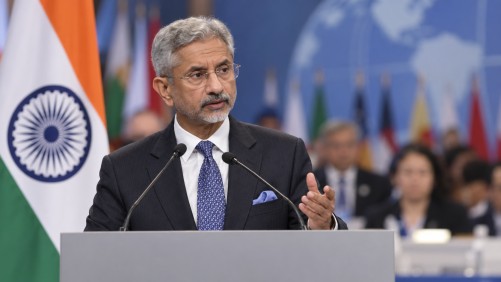
In an increasingly competitive international environment, the declining adherence to established international rules is contributing to the formation of new strategic “choke points,” according to Indian External Affairs Minister S. Jaishankar. Speaking at an Asia Society event in New York, Jaishankar highlighted how countries are leveraging their influence in areas like strategic waterways, financial systems, and market access to assert their dominance.
Jaishankar pointed to specific geographical choke points, such as the Strait of Hormuz, and financial constraints implemented through sanctions as examples of these emerging challenges. Additionally, he noted that countries with significant influence are also using travel and market-access restrictions as tools of leverage against competitors and adversaries.
The minister emphasized the growing tension between competition and interdependence in global relations. While nations vie for strategic and economic advantage, their economies and supply chains remain deeply interconnected, complicating diplomatic efforts. This duality creates a challenging landscape for diplomacy, requiring governments to balance competitive impulses with the realities of global interdependence.
Jaishankar’s remarks underscored the complexity of modern international diplomacy, where countries must navigate both strategic rivalries and their ongoing economic and political ties. This intricate interplay of competition and cooperation has made managing international relations increasingly difficult, as nations strive to maintain influence without disrupting their essential connections.